water Clean.
watts Green.
waste Lean.
MEDIA FILTRATION
w3Synergy designs and supplies filtration equipment used for the treatment of supply water from municipal, wells, surface water, and seawater sources. Filtration removes suspended particulates in the form of silts, clays, and inorganic and organic matter. Various filtration media are also available to adsorb organics or selectively remove hardness and heavy metals.
w3System – Packaged Filter Skids and Containers
w3Synergy media filtration systems are engineered to be “plug & play” (i.e. pre-plumbed, pre-wired and mounted on steel-frame skid). The footprint of w3Synergy skids can be customized to fit the available space within the project site.
Standard media filtration systems include:
• Composite fiberglass (FRP) vessel(s)
• Media (e.g. sand, carbon or resin)
• Control valves
• Controller with backwash capability
• Pressure gauges
• Powder-coated steel frame
If the system needs to be online 24/7, a Duplex assembly that allows for alternating between vessels during backwash can be supplied as an option. In duplex systems (i.e. two parallel media vessels/beds), each vessel has dedicated controller to operate valving during backwash and flush modes. The controllers are interlocked with each other; after one media bed finishes backwash, the next one commences its cycle.

Sand Filtration
Sand filtration and multimedia filtration (anthracite) are common methods of removing TSS. W3Synergy also offers zeolite filtration (e.g. Nextsand) as a more efficient means of media filtration providing 50 to 100% higher solids loading capacity.
Carbon Adsorption
Granulated activated carbon (GAC) is an effective media for removing disinfectants (chlorine, chloramine, and bromine), organic compounds and odor from the supply water.
GAC is also an effective method of removing manmade chemicals such as per- and polyfluorinated substances (PFAS).
Ion Exchange
“Softener” media containing ion exchange (IX) resin is used to remove hardness (calcium and magnesium ions) from the supply water by exchanging these ions with salt brine (sodium).
Greensand media is an effective treatment to remove iron, manganese and/or hydrogen sulfide from the feed water. Greensand is typically a silica sand core coated with manganese dioxide, w3Synergy uses a solid manganese dioxide media (e.g. Pyrolox) which lasts much longer than standard greensand.
Selective IX resin is also available to remove PFAS.

Microfiltration
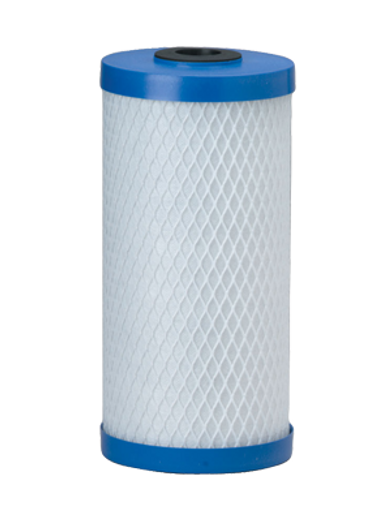
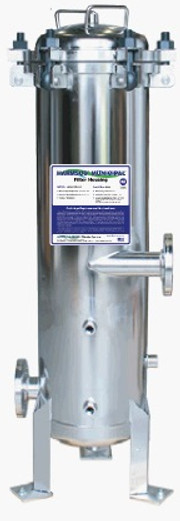
w3Synergy supplies stainless steel filter housings for cartridge and bag filtration with pore sizes ranging from 1 micron to 100 microns. The cartridges are available in a broad range of sizes and nonwoven fabrics (polyester, polypropylene).
Validated 1-micron absolute filters and housings are also available for drinking water projects requiring demonstrated LT2 removal of microorganisms and pathogens including giardia, crypto, viruses and e. coli (e.g. in CA and TX)
0.2-micron absolute filters and housings are available for high-purity, hygienic projects requiring post-treatment final filtration of bacterial pyrogens/endotoxins (lipopolysaccharides).
w3Synergy also offers self-cleaning stainless-steel filters; available with screen sizes ranging from 5 to 1000 microns to capture silt, fine sand and particles in challenging feed waters.
Sidestream Filtration & Disinfection
w3Synergy can supply a sidestream filtration & disinfection skid-mounted system that continuously filters a portion of the cooling tower water to remove suspended solids (TSS), organics and TDS; thereby, reducing the likelihood of fouling and biogrowth such as legionella and helps control scaling and corrosion. The components of the skid include disc filter, calcium and silica control, and UV disinfection.

Automation
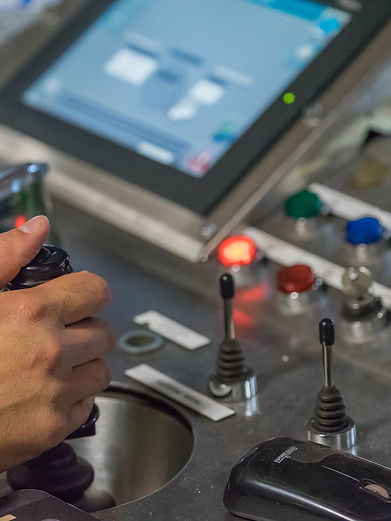
w3Synergy media filter systems are typically equipped with either Fleck or Clack controllers. For applications where the filter system is pretreatment to additional downstream systems (e.g. membrane separation), the option of full integration with a PLC (e.g. Allen Bradley, Siemens or Idec PLC) is also available. Automation allows for remote continuous online monitoring & control.